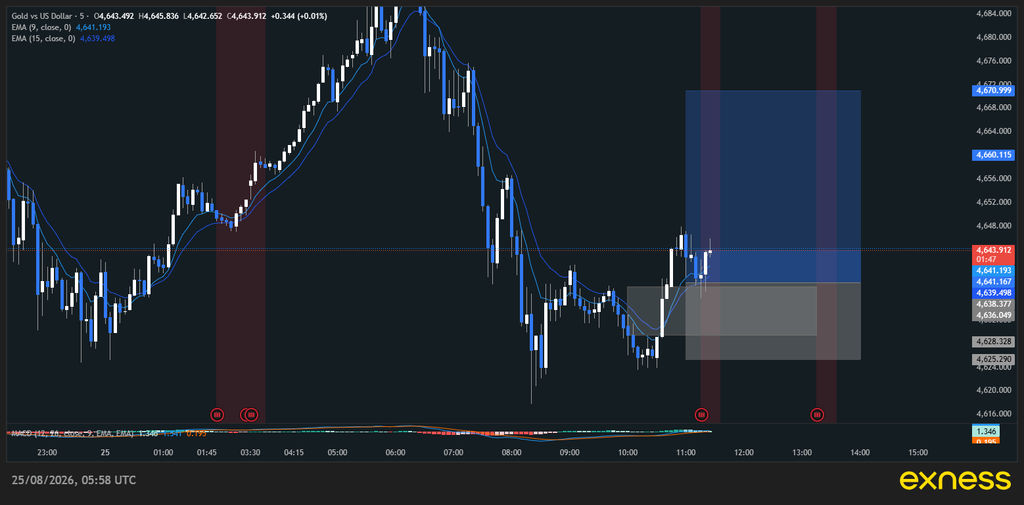
Option Trading: A Complete Beginner’s Guide to Understanding Options
Option trading is one of the most popular segments of the financial markets. It offers traders the opportunity to participate in the movement of stocks and indices with relatively less capital than buying the underlying asset directly. However, options are also complex instruments, and their leverage can increase losses quickly.
In this guide, we will understand what options are, how option trading works, Call and Put options, Strike Price, Premium, Expiry, Intrinsic Value, Time Value, and the major risks involved.
What Is Option Trading?
An option is a financial contract that gives the buyer the right, but not the obligation, to buy or sell an underlying asset at a predetermined price before or at a specific expiry date.
The underlying asset can be:
- Stocks
- Stock indices such as NIFTY or BANK NIFTY
- Commodities
- Currencies
- Other financial instruments
Unlike buying a stock, option trading involves contracts whose value depends on several factors, including the price of the underlying asset, time remaining until expiry, volatility, and interest rates.
Types of Options
There are two basic types of options:
1. Call Option (CE)
A Call Option gives the buyer the right to buy the underlying asset at the specified strike price.
Traders generally buy Call Options when they expect the underlying asset to move upward.
Example:
Suppose NIFTY is trading at 25,000 and you expect it to rise.
You buy a 25,200 CE for a premium of ₹100.
If NIFTY moves strongly upward, the value of the Call Option may increase.
2. Put Option (PE)
A Put Option gives the buyer the right to sell the underlying asset at the specified strike price.
Traders generally buy Put Options when they expect the underlying asset to move downward.
Example:
Suppose NIFTY is trading at 25,000 and you expect it to fall.
You buy a 24,800 PE for a premium of ₹100.
If NIFTY falls significantly, the value of the Put Option may increase.
Important Terms in Option Trading
Before entering the options market, traders should understand some basic terminology.
Strike Price
The strike price is the predetermined price at which the underlying asset can be bought or sold according to the option contract.
For example:
NIFTY 25,000 CE
Here, 25,000 is the strike price.
Premium
The premium is the price paid by an option buyer to purchase the option.
If an option premium is ₹100 and the contract lot size is 75, the approximate premium paid is:
₹100 × 75 = ₹7,500
The actual lot size can change, so traders should always verify the current exchange-defined contract specifications.
Expiry Date
Every option has an expiry date.
As expiry approaches, the time available for the option to become profitable decreases. This is one reason option premiums can lose value rapidly when the underlying asset does not move as expected.
Lot Size
Options are generally traded in lots rather than individual units.
For example, if the lot size is 75 and the premium is ₹100:
Contract Value = ₹100 × 75 = ₹7,500
Always check the current lot size before calculating position size because exchanges can revise contract specifications.
ITM, ATM and OTM Options
Options can broadly be classified into three categories.
In-the-Money (ITM)
An option is ITM when it has intrinsic value.
For a Call Option, the underlying price is above the strike price.
For a Put Option, the underlying price is below the strike price.
At-the-Money (ATM)
An option is ATM when the strike price is close to the current market price of the underlying asset.
For example, if NIFTY is trading around 25,000, the 25,000 strike may be considered ATM.
Out-of-the-Money (OTM)
An OTM option currently has no intrinsic value.
For a Call Option, the strike price is above the underlying price.
For a Put Option, the strike price is below the underlying price.
Intrinsic Value and Time Value
An option premium consists primarily of:
Option Premium = Intrinsic Value + Time Value
Intrinsic Value
Intrinsic value represents the amount by which an option is currently in-the-money.
For a Call:
Intrinsic Value = Spot Price − Strike Price
For a Put:
Intrinsic Value = Strike Price − Spot Price
The value cannot be negative; if the result is negative, intrinsic value is considered zero.
Time Value
Time value represents the additional amount traders are willing to pay because there is still time remaining before expiry.
As expiry approaches, time value generally decreases.
This phenomenon is known as Time Decay or Theta Decay.
What Is Time Decay?
Time decay is one of the most important concepts in option trading.
Suppose you purchase an option because you expect the market to move upward. If the market remains sideways for several days, the option premium may decline even if the underlying price has not moved significantly against you.
This happens partly because the option has less time remaining to become profitable.
For option buyers, time is generally working against the position.
For option sellers, time decay can potentially work in their favor, although option selling carries substantial risk and may require significant capital and risk management.
What Is Implied Volatility?
Implied Volatility, or IV, represents the market’s expectation of future price movement and is an important component of option pricing.
When expected volatility increases, option premiums can increase.
When volatility decreases, option premiums can decline.
This means an option buyer can sometimes be correct about the direction of the market and still lose money if volatility and other pricing factors move unfavorably.
The Option Greeks
Option Greeks help traders understand how an option’s price may respond to different variables.
Delta
Delta measures the approximate sensitivity of an option’s price to a change in the underlying asset.
Gamma
Gamma measures how quickly Delta changes when the underlying asset moves.
Theta
Theta represents the approximate impact of time decay on an option’s value.
Vega
Vega measures sensitivity to changes in implied volatility.
Understanding these Greeks can help traders make better decisions about option selection and risk.
Option Buying vs Option Selling
There are two broad approaches to options trading.
Option Buying
An option buyer pays a premium to purchase the option.
Advantages
- Maximum loss for the buyer is generally limited to the premium paid.
- Requires less capital than some option-selling strategies.
- Can provide significant returns if the market makes a strong move in the expected direction.
Disadvantages
- Time decay works against the buyer.
- The market must often move sufficiently and within the available time.
- Option premiums can fall quickly.
Option Selling
An option seller receives the premium from the buyer and takes on an obligation under the contract.
Potential Advantages
- Time decay can work in the seller’s favor.
- Sellers can benefit from sideways or range-bound markets in certain strategies.
Risks
Option selling can expose traders to substantial losses, depending on the strategy and whether positions are hedged.
Therefore, beginners should not treat option selling as an easy method of generating regular income.
A Simple NIFTY Option Example
Suppose NIFTY is trading at 25,000.
You believe NIFTY may rise sharply.
You purchase:
25,100 CE @ ₹120
Assume the lot size is 75.
Your premium cost would be:
₹120 × 75 = ₹9,000
If the premium rises from ₹120 to ₹180:
Profit per unit:
₹180 − ₹120 = ₹60
Approximate profit:
₹60 × 75 = ₹4,500
Similarly, if the premium falls from ₹120 to ₹60:
Loss:
₹60 × 75 = ₹4,500
This simple example demonstrates why position sizing and stop-loss management are important.
Why Do Most Beginners Struggle With Options?
Many beginners enter options because of the possibility of making large returns with relatively small capital.
However, common mistakes include:
- Buying options without understanding time decay
- Trading every market move
- Using excessive leverage
- Buying far OTM options because they look cheap
- Increasing position size after losses
- Trading without a defined stop-loss
- Ignoring volatility
- Taking trades based on tips or social media calls
- Holding losing positions until expiry
- Overtrading during expiry sessions
The biggest mistake is often focusing only on profit potential while ignoring risk.
A Better Approach to Option Trading
A disciplined options trader should focus on a structured process.
Step 1: Understand the Underlying Asset
Before trading an option, analyze the underlying instrument.
For example:
- Market trend
- Support and resistance
- Demand and supply
- Price action
- Volume
- Volatility
- Important economic or market events
Step 2: Define Your Trading Setup
Do not enter a trade simply because the premium is moving.
Have a clear reason for the trade.
Step 3: Choose the Appropriate Option
Strike selection should be based on your strategy, expected move, volatility and time to expiry—not simply on which option looks cheapest.
Step 4: Define Risk Before Entry
Know:
- Entry price
- Stop-loss
- Target
- Maximum acceptable loss
- Position size
Step 5: Manage the Trade
Once the trade is active, avoid emotional decisions.
Follow the predefined plan.
Option Trading and Technical Analysis
Technical analysis can be combined with options trading to identify potential trading opportunities.
A trader may analyze:
- Market structure
- Support and resistance
- Breakouts
- Breakdowns
- Demand and supply zones
- Order blocks
- Candlestick patterns
- Trendlines
- Volume
- Open Interest
However, technical analysis does not guarantee profitable trades. The option premium can behave differently from the underlying asset because of time decay, implied volatility and other pricing factors.
Risk Management Is More Important Than Entry
A good strategy cannot protect a trader who consistently takes oversized positions.
For example, instead of risking a large percentage of your trading capital on one trade, you can define a fixed maximum loss before entering.
A simple framework is:
Risk per trade → Position Size → Stop Loss → Target
This creates consistency and prevents one bad trade from damaging the entire trading account.
Final Thoughts
Option trading is not simply about predicting whether the market will go up or down.
Successful options trading requires an understanding of:
Price Action + Option Pricing + Time Decay + Volatility + Greeks + Risk Management + Psychology
Options can provide flexibility and powerful trading opportunities, but they also carry significant risks. Beginners should first understand the mechanics of options and practice with a well-defined strategy before committing substantial capital.
The goal should not be to find a trade that makes the most money.
The goal should be to develop a repeatable process where risk is controlled and decisions are based on a clear trading plan.
Trade the setup, manage the risk, and never let one trade control your account.
Disclaimer: This article is for educational purposes only and is not investment advice. Options trading involves substantial risk and may not be suitable for every investor. Always understand the risks and consider your financial situation before trading.